 By admin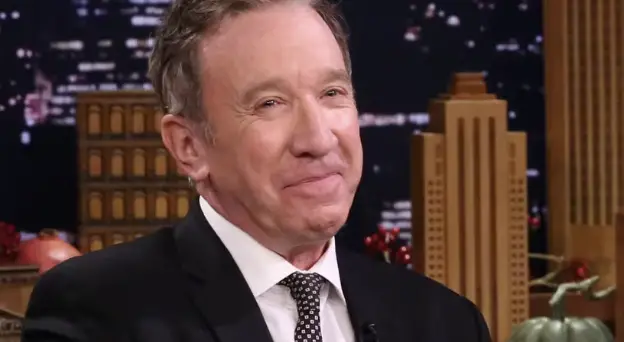
Tim Allen has publicly vowed to forgive the man who killed his father, saying he was moved to make the reversal after hearing Erika Kirk declare forgiveness for the accused killer of her husband, conservative activist Charlie Kirk, during a memorial service in Arizona last week.
“When Erika Kirk spoke the words on the man who killed her husband: ‘That man… that young man… I forgive him.’ That moment deeply affected me,” the actor wrote on X. “I have struggled for over 60 years to forgive the man who killed my Dad. I will say those words now as I type: ‘I forgive the man who killed my father.’ Peace be with you all.”
Allen’s message followed a widely viewed appearance by Erika Kirk at a public memorial for her husband on 21 September at State Farm Stadium in Glendale, Arizona. In remarks anchored in her Christian faith, she told mourners she forgave the man accused of shooting Kirk on 10 September in Orem, Utah.
“My husband, he wanted to save young men, just like the one who took his life,” she said. “That man, that young man, I forgive him. I forgive him because it was what Christ did and it is what Charlie would do.” The line drew a standing ovation inside the NFL stadium, where tens of thousands gathered to remember the 31-year-old organiser and Turning Point USA founder.
Prosecutors in Utah have charged 22-year-old Tyler Robinson with aggravated murder and related counts in connection with the 10 September shooting near Utah Valley University; he is being held without bail as the state signals it will seek the death penalty.
A hearing is set in Provo to determine next steps in the case, and court filings cite messages and forensic evidence investigators say link Robinson to the killing. Authorities have not alleged a specific ideological motive in public documents, and the defendant has not entered a plea.
Allen, 72, has long spoken about the 1964 crash that killed his father, real-estate agent Gerald M. Dick, when a drunk driver crossed a median and struck the family’s car. Allen was 11 years old at the time and has described the loss as formative.
Biographical references and regional histories place the accident in November 1964; subsequent accounts have noted that the actor was not in the vehicle but that the death reshaped his early life in suburban Detroit. In his post this week, he framed his statement as a hard-won decision after decades of struggle.
The “Home Improvement” star’s decision came days after Erika Kirk’s pledge of forbearance set the tone of the Glendale memorial, which drew major political figures and conservative media personalities alongside the Kirk family and Turning Point USA staff.
People and CBS News put attendance in the tens of thousands, with images showing the stadium floor and lower bowl filled for tributes that mixed prayer, eulogy and political rhetoric. The event followed private services and campus vigils in Utah and Arizona that reflected the pace and reach of Kirk’s public life.
Erika Kirk’s remarks served both as a personal testament and as a policy marker for the movement her husband built. In addition to forgiving the accused gunman from the dais, she signalled continuity at Turning Point USA, whose board named her chief executive and chair the previous week.
Organisers said the group would press ahead with a reconfigured autumn campus tour and continue publishing archival content recorded in the months before Kirk’s death. Her speech, delivered in a measured cadence and punctuated by long pauses, emphasised prayer and reconciliation even as she acknowledged what she called “a level of heartache that I didn’t know existed.”
The emotional register of the evening contrasted sharply at points with remarks by former President Donald Trump, who praised the activist’s work but bluntly told the audience, “I hate my opponent,” noting he did not share the widowed speaker’s posture toward adversaries.
The exchange—Erika Kirk’s declaration of forgiveness followed later by Trump’s admission—was cited by several outlets as illustrative of the differing impulses on display at a high-profile conservative memorial. It was the earlier moment, however—the widow’s simple “I forgive him”—that Allen said precipitated his own reassessment.
Allen’s post was quickly aggregated by national and local outlets, many of which highlighted his reference to “over 60 years” of wrestling with the memory of the crash that killed his father.
The Detroit News, Yahoo and Entertainment Weekly each recapped the actor’s message and supplied biographical background on Gerald Dick’s death, noting the family’s Michigan ties and the long interval since the accident. People, citing family accounts, said the crash occurred when a drunk driver crossed a median and struck the family car, killing the elder Dick and altering the course of the household’s life.
In the years before his latest statement, Allen had intermittently discussed faith and loss in interviews and on social media, describing a journey from scepticism to a renewed interest in Christianity.
In recent posts, he has written about reading the Bible cover-to-cover and moving from the Old Testament into the New, calling the experience “amazing” and “such a gift,” according to Christian outlets that track celebrity testimony. Those accounts also reference a 2011 network interview in which he said his father’s death left him questioning God, followed by a gradual return to faith as he aged.
For supporters of the Kirk family, the Glendale service was both memorial and message, with Erika Kirk’s words forming the moral centre of the event. Washington Post coverage argued that her invocation of the Sermon on the Mount—“turn the other cheek”—represented a rare primacy of religious ethic over political grievance, while other reports focused on the practical consequences of her assurance that the work of Turning Point USA would continue under her leadership.
Amid the speeches, the widow’s short line—“I forgive him”—became the night’s refrain, echoing in subsequent tributes and, by Allen’s account, across far different corners of American culture.
The criminal case in Utah continues on a separate track. Charging documents and court calendars reviewed by the Associated Press indicate prosecutors will pursue a capital case against Robinson, with a near-term hearing on whether he will waive a preliminary examination.
Investigators have cited texts and DNA as part of the probable-cause narrative in filings; the defence has not publicly responded in detail, and the court has set further scheduling pending the defendant’s decision on a plea. University officials in Orem say they have commissioned an independent security review of the conditions around the campus event at which Kirk was shot.
Allen’s note did not mention the accused gunman by name nor offer further detail on his family’s 1964 loss. The actor, born Timothy Alan Dick in Denver and raised in suburban Detroit, has typically marked personal milestones privately despite a decades-long public profile that spans sitcom stardom, film franchises and, more recently, streaming work.
Regional histories and encyclopaedias record the outline of his early years: the move to Birmingham, Michigan, after his mother remarried; a path through Central Michigan and Western Michigan universities; and an early stand-up career that led to television. On Thursday, the message he posted was narrowly focused: acknowledging a debt to a widow’s example and committing to a word he said he had never been able to say.
Reactions from fans and faith-based commentators framed Allen’s statement as an example of the reach of Erika Kirk’s remarks beyond the movement her husband helped lead.
Christian outlets praised what they called a “witness” of forgiveness, circulating short clips of the stadium moment and pairing them with screenshots of the actor’s text.
In entertainment coverage, the post was treated as a coda to a week that brought renewed scrutiny to the balance of religion and politics at a memorial that functioned, for many in attendance, as both farewell and rally.
The standard legal caveats around the criminal case remained in place as Allen’s words spread: Robinson is charged but presumed innocent unless and until a court determines otherwise; motive has not been formally outlined by prosecutors; and the timetable from arrest to trial in capital cases can stretch across months or years.
For the family at the centre of the memorial, the procedural horizon formed the background to grief. For Allen, a tragic event in another household served as the catalyst for closing a personal circle that began on a Colorado roadway in 1964.
By the end of the weekend, the archive of the Glendale service—official video, network reels and wire photographs—had fixed Erika Kirk’s remarks and the scale of the audience in the record. Subsequent recaps tallied attendance, catalogued speakers and reproduced the lines most likely to endure.
Among them were a widow’s four words—“I forgive him”—and an actor’s reply, posted from another city two days later, that took the form of the same sentence applied to a different past.
Whether Allen’s declaration remains a private resolution or becomes a new thread in his occasional public reflections on faith and family, the change he announced was plain from his own account: he heard a line on a Sunday evening and, by Thursday, wrote that he could finally repeat it, 60 years after the night his father died.